RelationalAI gives agents the context, tools, and intelligence they need to reason over your business and make better decisions on the data and AI platform you already trust.


18 cells at risk; 6 already >80% load. Rebalance to sectors A/B and cap video to 720p in ZIPs 76112–76120. Predicted drop in call‑failures: −67%.
Set floor at $14.20; revenue +8.3%, under‑delivery risk 1.1%. If $15.00, revenue +10.6% but breach risk 6.4% in weeks 47–48.
12 lots at risk; median shortfall 7%. Two levers: lower reserve by 3–5% (+$610k sell‑through) or boost bidder liquidity in TX/AB via targeted email to 4,200 lookalikes (+$480k).


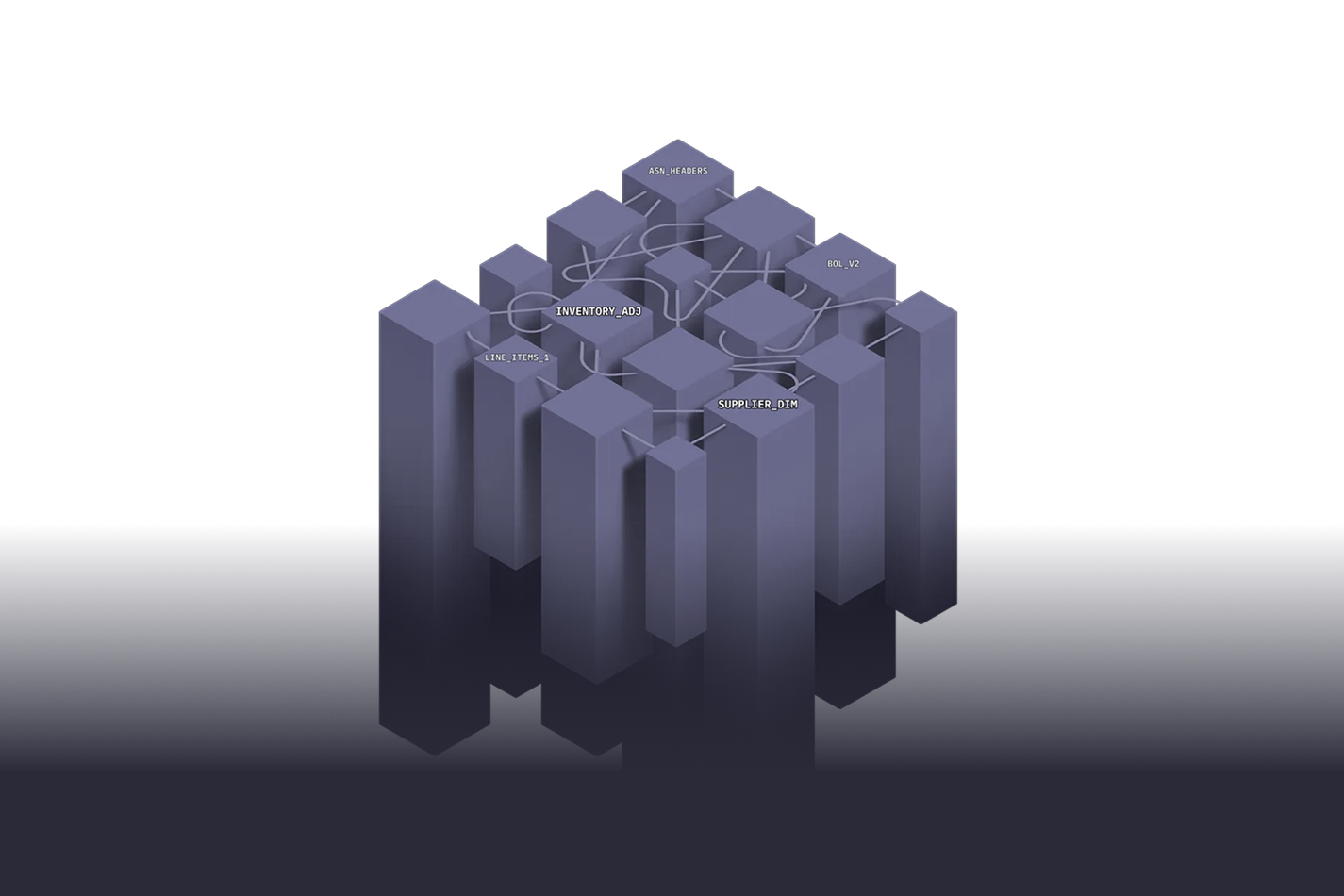


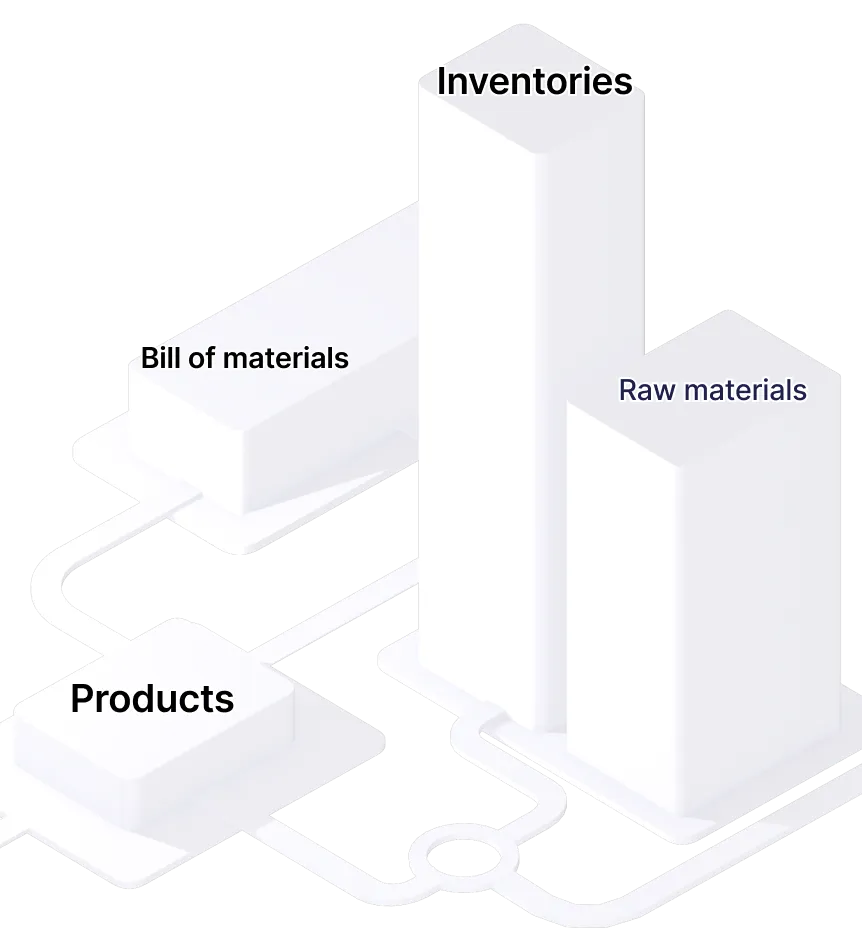
Tracks inventory levels, movements, and status across facilities, enabling accurate stock management, allocation, and valuation for both raw materials and finished products.
1.98K records • Last updated 2 minutes ago



BETTER CONTEXT
Give agents a model of how your business works.
A relational ontology captures the concepts, relationships, semantics, and business logic agents need to understand the enterprise—not just the data in front of them.
Relational ontology
BETTER TOOLS
Give agents specialized ways to reason.
Go beyond SQL and Python with data-aware reasoners for rules, graphs, prediction, and optimization—so agents can answer questions that require more than retrieval or generated code.
Rules · Graph · Predictive · Prescriptive
BETTER MODELS
Make models smarter about your business.
Combine frontier models with open-weight models specialized using enterprise data and ontological semantics.
Enterprise post-training



What is affected, and what's the lowest-risk response?
Understand complex dependencies, trace impact across connected systems, and determine what to do next.
Network recovery · Supplier disruption · Fraud networks · Change impact

What's the best decision given our objectives and constraints?
Combine predictions, rules, resources, and constraints to find the best feasible course of action.
Supply chain · Inventory · Pricing · Scheduling · Resource allocation

What is allowed, required, or prohibited? Why?
Apply complex rules consistently across connected data while preserving the reasoning behind every decision.
AML · IBOR · Eligibility · Regulatory compliance

What is likely to happen next?
Use the relationships and context already in your business to predict outcomes and identify where intervention matters.
Demand · Churn · Failure · Risk · Customer behavior



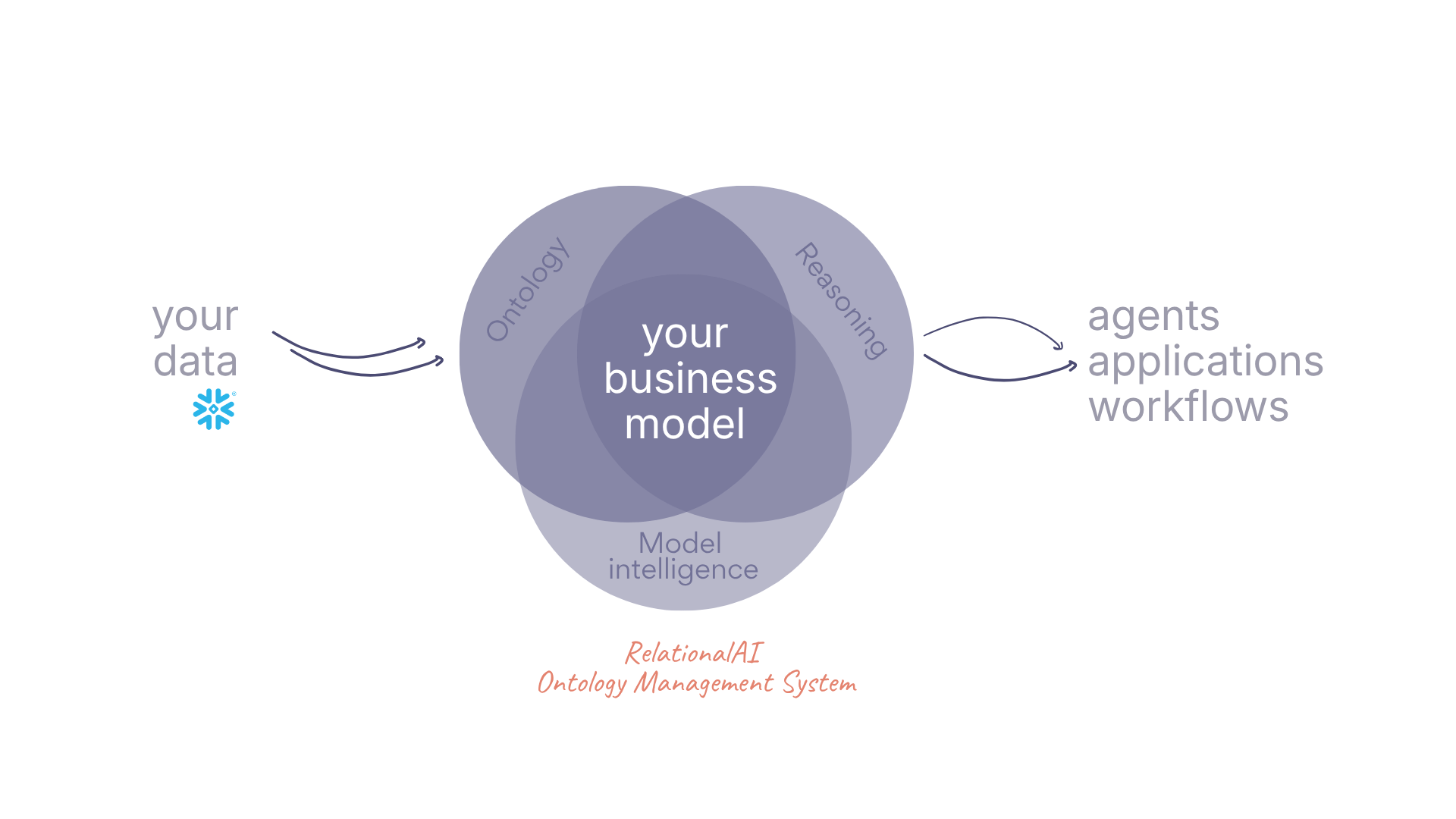
An Ontology Management System creates, governs, executes on, and evolves a shared model of how your enterprise works.
With it, we connect semantics, relationships, rules, predictions, constraints, and decision logic in one Snowflake-native solution for Decision Intelligence.
©2026 RelationalAI. All rights reserved.


